
What to Expect on a Small Wine Cellar Tour: A First-Timer’s Guide
Someone hands you a glass at half past ten in the morning in a room that smells of oak, cold stone and last night's ferment, and you find yourself wondering whether you were supposed to know something before you arrived. You weren't. Small wineries — the kind with a dozen barrels, a hose coiled on the floor and a dog asleep by the door — build their tours for curious people, not for exam candidates.
Even so, a little preparation changes the day. Knowing roughly how long you'll be standing, why the room is cold enough to see your breath, and what happens between the first pour and the last makes it easier to relax and actually taste. Here is what a typical visit looks like from the other side of the barrel room door.
The Shape of the Visit: Timing and Group Size
Most small-cellar tours run between sixty and ninety minutes, and the time splits fairly predictably. Figure on fifteen to twenty minutes of introduction — the family, the vines, the vintage — then twenty or thirty minutes walking through the production area and the barrel room, then half an hour seated with glasses. Some estates compress this to an hour; others stretch it if the conversation is good and nobody is waiting behind you.
Groups are usually small, anywhere from four people to a dozen, and occasionally you'll be the only booking of the day. Arrive about ten minutes early. Ask when you book about parking and about the last stretch of road, because rural access routes can be narrow, unlit and confusing in a way that satellite navigation handles badly. Book ahead rather than turning up: a small cellar rarely has spare staff to absorb walk-ins, and a tour that starts late tends to stay late.
One timing note worth knowing. During harvest, roughly late summer into autumn, the cellar is a working site rather than a showpiece. Tours may be shortened, rearranged or run around a press that is loudly doing its job. That can be the most memorable visit of your trip, but it is not the quiet version.
Inside the Cellar: Cold, Damp and Dark by Design
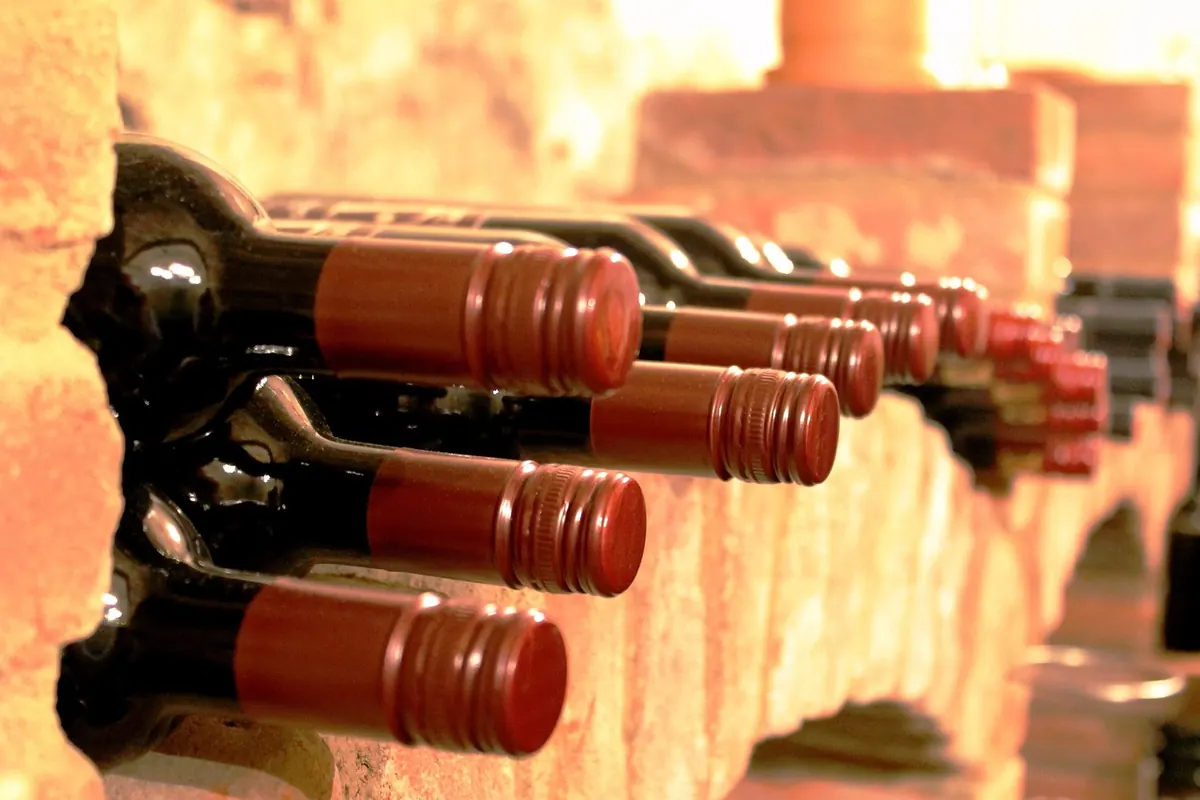
Cellars are built for wine, not for visitors. Barrel rooms are commonly held somewhere around 12–14 °C, with noticeable humidity, low light and floors that are concrete, gravel or stone. There will be hoses, crates, uneven thresholds, perhaps a staircase with a handrail that has seen better decades. Bring a jumper even if it is thirty degrees outside. Sandals are a poor choice; closed shoes with a bit of grip are the right one.
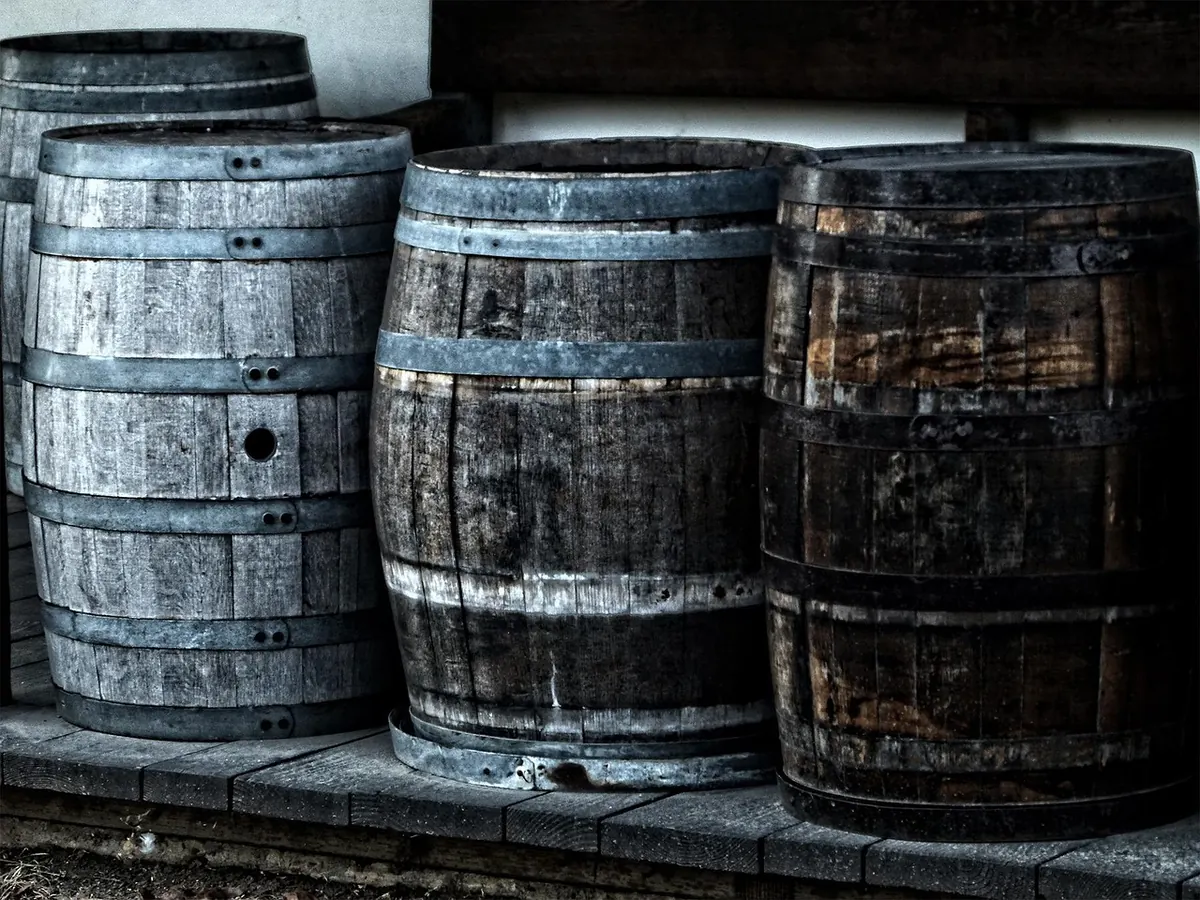
Keep your hands off the barrels, the casks and the glass thief someone has left on a ledge. Ask before photographing staff, labels or the inside of the cellar — some producers are relaxed about it, others are not, and it is a small courtesy. If you notice black staining on the walls or the barrel heads, don't point at it in alarm. In a damp working cellar it is ordinary, and often a sign the conditions are doing what they should.
How the Tasting Usually Flows
The order is rarely random. Small estates tend to pour in a sequence that builds from light to heavy, so your palate is not flattened by a big red before it meets a fresh white. A typical line-up looks like this:
- A white or rosé first, served cold, to set a baseline.
- Lighter reds, often unoaked or only briefly in wood.
- Fuller reds, usually the flagship or the oldest barrels in the room.
- Something sweet or fortified, if the estate makes one.
- Occasionally an older vintage, if the conversation is going well and the host is in the mood to open something.
Pours are small — a few mouthfuls, not a full glass — and there is no expectation that you finish everything. A spittoon will usually be on the table or within reach. Using it is normal and not rude; so is tipping the rest of a glass into it, though it is polite to ask first. Water and bread or crackers are there to reset your palate, not to fill you up, so use them between wines rather than after each sip.
Often the person pouring is the owner, a family member or the winemaker. Interrupt with questions. There is no script to protect.
Questions Worth Asking
Good questions get good answers, and they also steer the visit toward whatever interests you most. A few that tend to open up a conversation:
- How many hectares do you farm, and which grapes grow best on this slope?
- Which vessels are we standing among, and why did you choose them for this wine?
- How long does the flagship spend in barrel, and how long in bottle before release?
- What is the oldest vintage you still have, and when would you drink it?
- What do you open at home on a Tuesday?
- Which wine here would you pair with dinner tonight, and why?
- Can I buy what we tasted today, and how does shipping work?
Save the technical questions for the seated part of the tour rather than mid-sentence in front of a barrel. And instead of asking which wine is "the best" — a question nobody can answer honestly — ask what they drink themselves. You'll learn more.
Etiquette, Spitting and the Drive Home
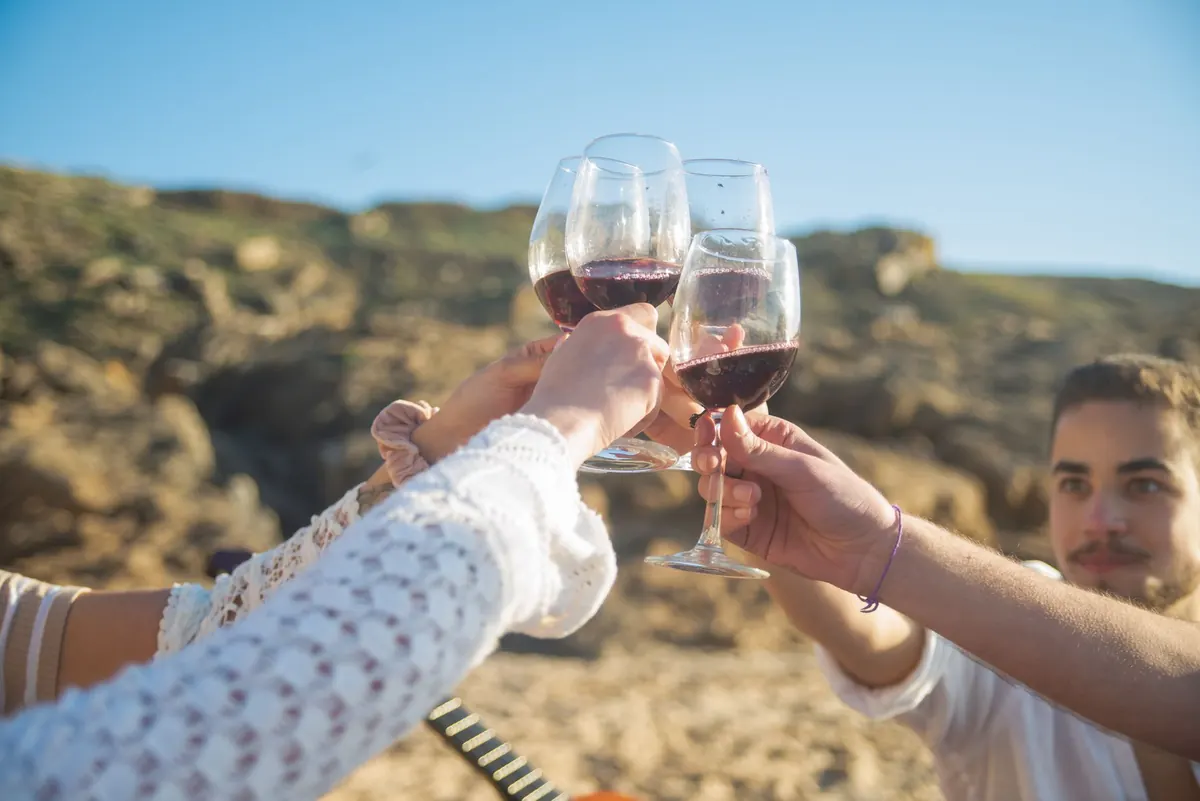
Go easy on perfume and aftershave; strong scents sit in a small tasting room and flatten everyone's sense of smell. Hold the glass by the stem, swirl gently over the table rather than the floor, and don't clink glasses hard.
Spitting is entirely acceptable and is the practical choice if you are driving. Drink-driving rules differ from country to country and are taken seriously everywhere, so check the limit that applies to you rather than guessing, and arrange a driver, a taxi or a place to stay if you plan to swallow. Eat something beforehand, drink water alongside the wine, and remember that a tasting on an empty stomach at eleven in the morning behaves differently from one at seven in the evening.
Before You Leave: Choosing a Bottle
Buy something you actually tasted and liked, not something you feel obliged to take home. If you enjoyed a wine that isn't in the shop yet, ask about release dates. Cross-border shipping rules vary and small estates often ship only within their own country, so confirm the details before you assume. Ask how long the bottle should keep and whether it needs time in the cellar; a young tannic red bought on the day is not always the one to open that weekend.
A Short Checklist for Your First Visit
Layer up, wear closed shoes, arrive ten minutes early, and bring water. Decide who is driving before the first glass, not after the fourth. Take a notebook or use your phone for label photos, because by the end of a tasting most people cannot reliably remember which wine was which. And keep the tour small in your mind: you are not there to pass a test, just to taste carefully and ask what you're curious about. The rest tends to look after itself.
Photo: ArtTower / Pixabay